Whether you are an SEO fresher or working in a digital marketing agency, we all want tools that will simplify the process of SEO while also improving the results.
SEO chrome extensions not only make the SEO optimization process easier, but these extensions also help to eliminate the need for expensive tools.
But finding the best ones out of many can be an exhausting process. To help you out finding the right Chrome extensions, I’ve compiled a list of the best SEO Chrome Extensions that users trust, rank on Google, and are compatible with SEO practices.
Ubersuggest – Best for Keyword Research & Competitor Spying
Chrome Rating: 4.5/5
Ubersuggest, created by Neil Patel, is a fantastic free SEO tool that shows keywords’ monthly search volume, CPC, & Competition data.
The Ubersuggest tool also shows the top-performing keywords of your competitor’s website. With this data, you can improve your keyword strategy and see which keywords are worth targeting.
Through this data, you can find out the opportunities and the list of keywords you might be missing.
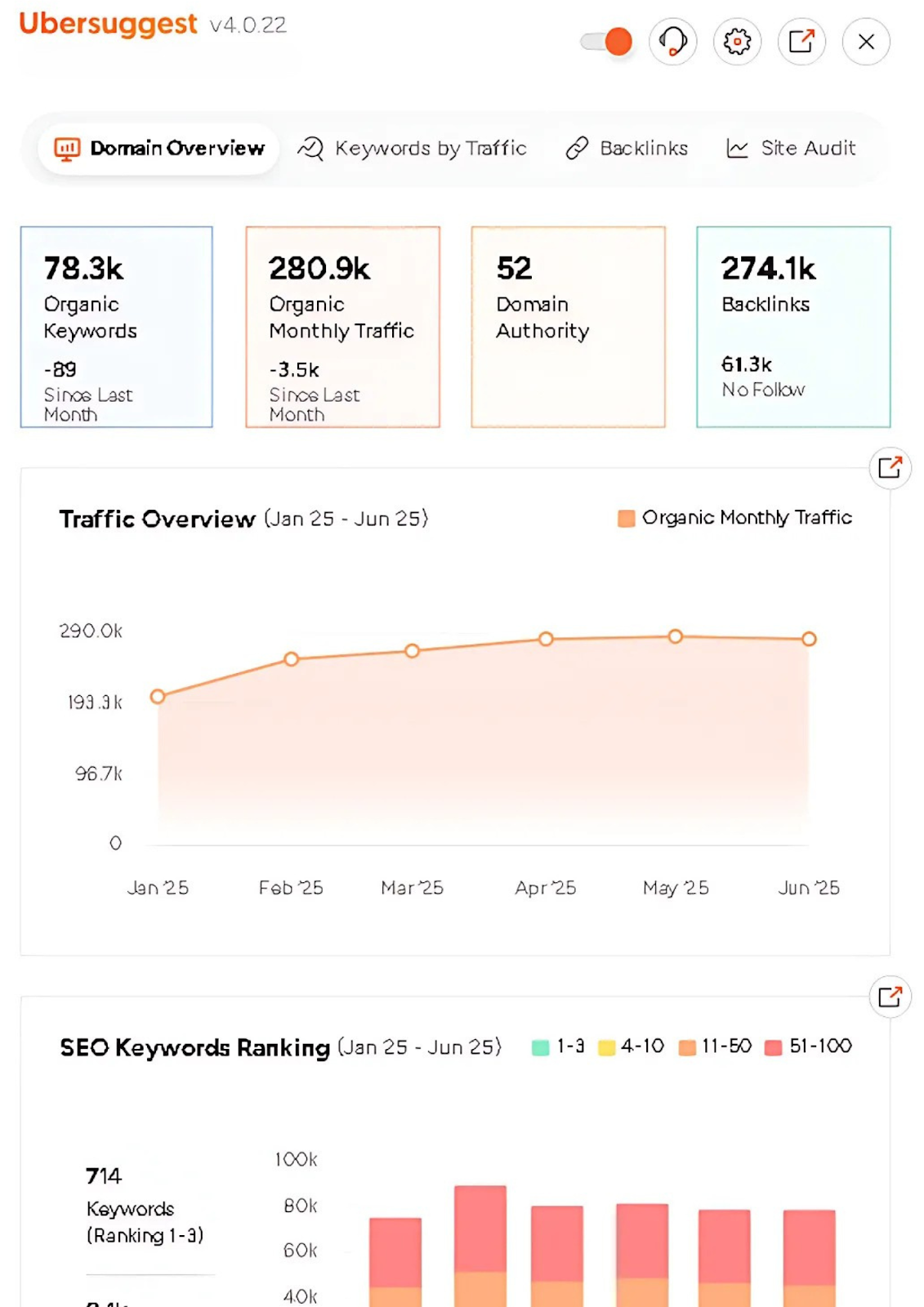
UberSuggest extension isn’t just for Google! But also provides the insightful data on sites like YouTube, Amazon & more.
Aside from keyword insights, Ubersuggest also provides data on your competitors’ backlinks, and you can view metrics like Domain Authority, the number of referring domains, and monthly organic traffic.
Despite being a free Chrome extension, you are limited to 40 searches per day. It can help a beginner, but if you are a professional or a team of digital marketers and need detailed information, you need to buy the subscription.
Pros:
- Shows top-ranking keywords and estimated traffic for any competitor’s site — on the free plan.
- Works across Google, YouTube, and Amazon in one extension.
- New AI content idea generator available directly from keyword suggestions.
- Backlink overview (DA, referring domains) included without logging in.
- Cleaner interface than most — beginner-friendly without dumbing down the data.
- The extension auto-disables after 3 days of inactivity to stop slowing your browser.
Cons:
- Free plan still caps you at 40 searches per day — which sounds fine until a big research session.
- Paid plans jumped in price; Individual plan is now $29/month (was cheaper in 2024).
- Data accuracy still lags behind Ahrefs and SEMrush for newer or niche domains.
- Occasional slow load on older devices when the sidebar pulls up competitor data.
- Chrome-only — no Firefox or Safari version as of early 2026.
Best Use Case: Freelancers, bloggers, and small business owners who want quick competitor insights and keyword validation without committing to a $100+/month platform. The free plan covers most day-to-day research needs.
Mozbar – Best for Authority Checks & Link Building Qualification
Chrome Rating: 4.0/5
Mozbar created a metric named Domain Authority (DA). Domain authority is used to define how your website ranks in search results. The higher the domain authority of your website, the higher the chances of ranking in search engine result pages.
The Mozbar tool is a free extension that provides metrics like domain authority, page authority, and spam score of any website. You can also view on-page elements like the markups, HTTP status, title tag, meta, heading tags, and image alt texts.

The premium version provides you with more detailed information, including link metrics, top-ranking keywords, in-depth SERP analysis, and page optimization. Moz Pro gives a free trial for 30 days, and a monthly subscription starts at $49.
Pros:
- DA and PA metrics are the most widely recognised authority scores in the industry.
- Spam score catches bad link prospects before you waste outreach effort.
- On-page element inspection (title, meta, headings, alt text) is free and genuinely useful.
- SERP overlay shows authority metrics for all results at once — great for competitive analysis.
- Custom search lets you simulate results from specific locations or search engines.
- Link highlighter differentiates internal, external, followed, and nofollow links visually.
Cons:
- Moz Pro has jumped to $167/month — hard to justify if you only want the extension features.
- Free version is noticeably bare compared to what premium unlocks.
- DA scores can be misleading for brand-new sites and very niche verticals.
- Some users report slow load times when browsing heavily linked pages.
- Interface looks dated next to newer extensions — function over form.
Best Use Case: Link builders, outreach specialists, and anyone doing competitor backlink analysis. Even the free version gives you enough to decide in under 3 seconds whether a site is worth targeting.
SimilarWeb – Best for Competitor Traffic & Multi-Channel Analysis
Chrome Rating: 4.3/5
SimilarWeb gives you the real-time data of your competitors. This free Chrome extension reveals real-time traffic, engagement metrics, top-ranking keywords, and Global ranking data of your competitors and allows you to understand the site performance of every website.
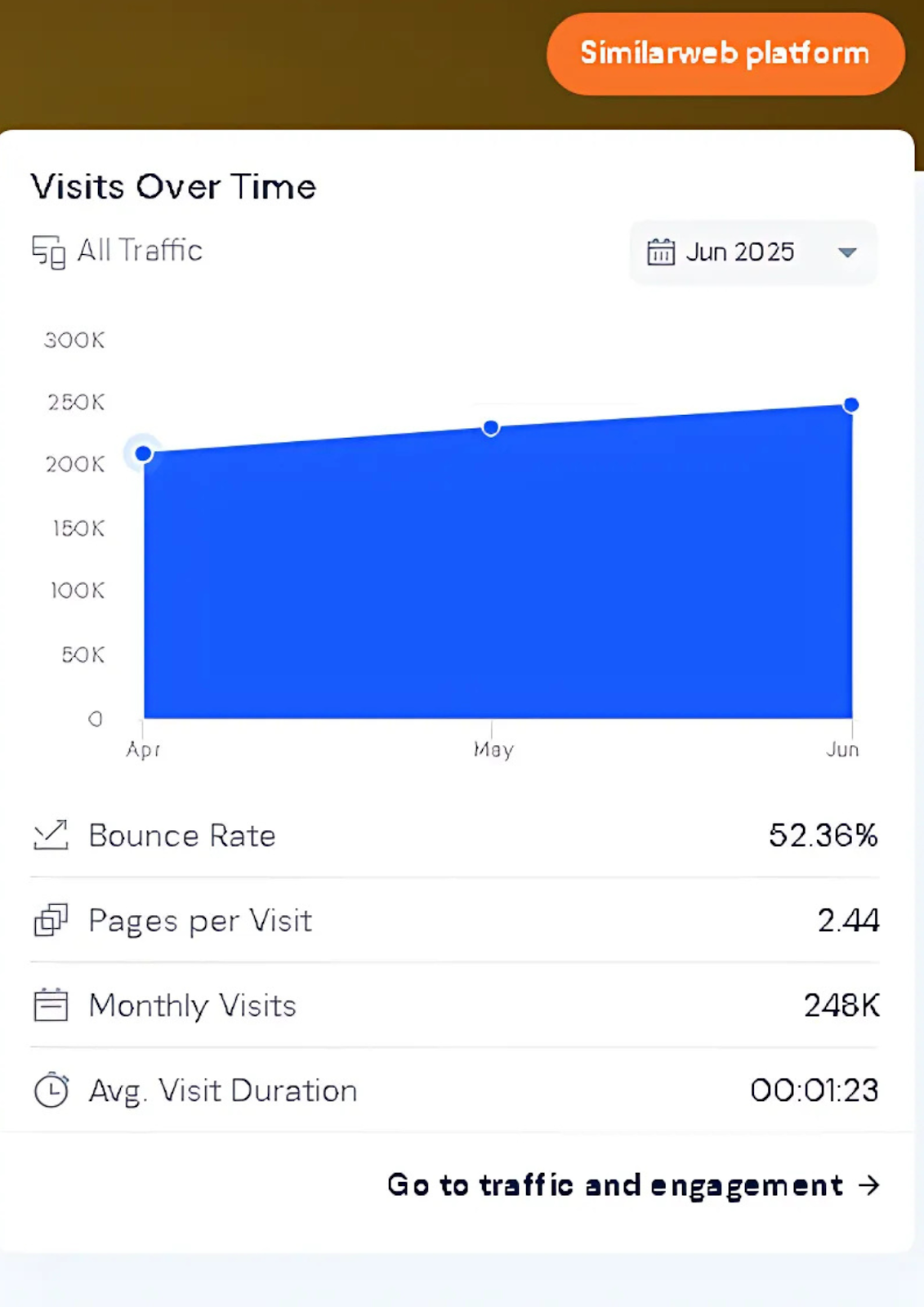
SimilarWeb provides the following:
- Visits over time.
- The top-ranking keywords of your competitor’s website.
- Traffic sources include search, social, referral, email, and display ads.
- List of top countries that are driving traffic and the percentage of visitors.
- Global website ranking.
Pros:
- Multi-channel breakdown: organic, paid, social, referral, email, and direct in one view.
- Engagement metrics (bounce rate, session duration) help gauge how loyal a competitor’s audience is.
- Top countries by traffic share — useful for international SEO and market research.
- Global and category ranking gives you a benchmarking reference point.
- Useful for pitching clients — nothing makes a competitor gap obvious faster.
- No heavy setup required beyond joining the contributor network.
Cons:
- Free version shows limited historical data — often just the last month.
- Data is unreliable for smaller or newer sites with limited traffic.
- You can’t see specific keywords without upgrading to a paid plan.
- The contributor model (sharing your browsing data) won’t suit everyone.
- Enterprise pricing is custom and often expensive for small teams.
Best Use Case: Marketing managers, agency strategists, and anyone who needs to build competitor profiles or back up a pitch deck with real traffic data. Best used alongside a keyword-focused extension for a complete picture.
SEOquake – Best for On-Page Audits & SERP Data Export
Chrome Rating: 4.5/5
SEOquake is a free Chrome plugin that gives an extensive overview of any website. Like keyword density report, backlink analysis, internal/external link analysis, and gives you information about Google and Bing indexing, and your SEMrush ranking.
SEOquake also gives you a SERP overlay bar that appears below each SERP result. Once you enable this Chrome extension, this will give you the detailed metrics of SERP results along with a sidebar that will allow you to export your results.
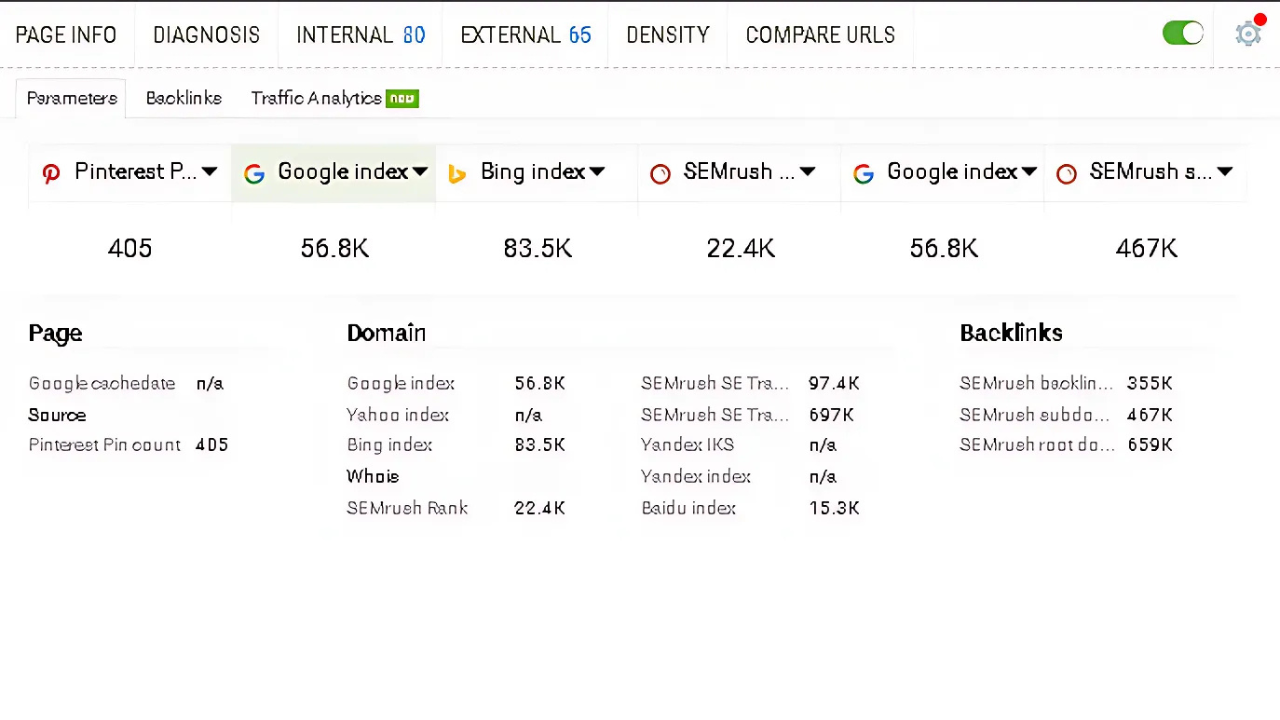
SEOquake does more:
- It reviews all major metrics.
- Do a thorough analysis of SERP results, and allows you to export results in CSV format
- Keyword difficulty estimation
- Allows you to run a complete audit of a webpage
- Allows you to check Facebook social statistics
- It allows you to set parameters for the search query
- Also provides you detailed report on internal and external links
- Allows you to compare URLs and domains
- Provides results of mobile compatibility
SEOquake consists of several tools you can use depending on your specific SEO needs. It also allows you to customize the core metrics so you can prepare your report according to your needs.
Pros:
- SERP overlay adds data bars to every Google result — see metrics without clicking anything.
- CSV export of entire SERP results is something almost no free tool offers.
- Full on-page SEO audit covers keyword density, link structure, headings, and meta data.
- Completely free with no daily limits or account requirements for most features.
- Connects to Semrush for deeper keyword and rank data if you already pay for it.
- Side-by-side URL and domain comparison is unique among free extensions.
- Works on both Google and Bing.
Cons:
- The amount of data on screen is genuinely overwhelming for beginners.
- SERP overlay noticeably slows down Google search results page load times.
- Some metrics (Semrush rank data) are more useful if you have a Semrush subscription.
- Keyword search volume isn’t built in natively — you need Semrush for that.
- Interface is functional but hasn’t been visually updated in years.
Best Use Case: SEO analysts, technical SEOs, and anyone who works with data in spreadsheets. If you regularly need to analyse full SERPs, compare domains, or run on-page audits without a paid platform, this is the most feature-complete free option available in 2026.
Keyword Surfer – Best for Instant Keyword Insights While You Browse
Chrome Rating: 4.5/5
What if you can get keyword ideas and see search volumes directly in the search result pages? Yes, with Keyword Surfer, you can do just that.
Each time you search for something on Google, you will see keyword ideas and monthly search volumes.
It’s very easy to use, just download the Chrome extension and enable it. Then, search for any term on Google, and you will see Keyword Surfer on the right side of the Search results page with similar keyword ideas and search volumes in your chosen area.
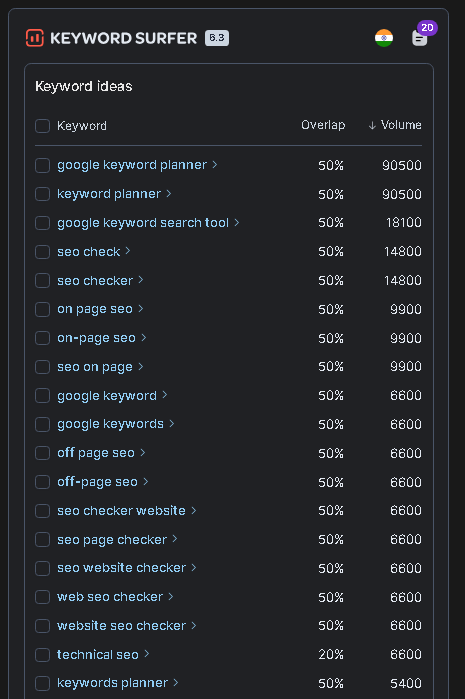
With Keyword Surfer, you can uncover keyword ideas, search volume, CPC, related terms, visibility metrics, and on-page data.
Pros:
- Shows keyword search volume directly in Google results — zero workflow disruption.
- No account required, no daily limits, completely free.
- Related keyword suggestions appear automatically on every search.
- CPC data helps prioritise keywords by commercial value.
- On-page word count for each ranking result — useful for content benchmarking.
- New in 2026: Built-in article outline generator based on top SERP results.
- Keyword collection feature lets you save and export keyword ideas as CSV.
Cons:
- No backlink data, domain authority, or competitor traffic analysis.
- Works only on Google — doesn’t function on YouTube, Amazon, or other platforms.
- Search volume estimates are less granular compared to premium keyword tools.
- No page audit capabilities.
- Limited to keyword-level insights — not suitable for technical SEO tasks.
Best Use Case: Content writers, bloggers, and content strategists who want keyword data during normal research without interrupting their flow. Also the best first extension for anyone just getting started with SEO — nothing to set up, nothing to pay for, and the value is immediate.
Still Struggling to choose the right one
Well, yes, there are many SEO free Chrome extensions available right now, and each helps in different SEO practices. By answering these questions, you can choose the right tool: What features are you looking for in a tool? Which one can help you reach your goals?
Surely this will help you narrow your search for the right Chrome extension.
Also, check the reviews and ratings, ease of use, and consider the updates.